Showing posts with label currency. Show all posts

Saturday, April 05, 2014

IRS Rules Bitcoin Property Not Currency.

The IRS ruled that virtual currency, such as Bitcoin (BTC),  is not considered currency, but property for U.S. federal tax purposes. In other words, it does not have legal tender status in any jurisdiction

“The Internal Revenue Service (IRS) is aware that “virtual currency” may be used to pay for goods or services, or held for investment. Virtual currency is a digital representation of value that functions as a medium of exchange, a unit of account, and/or a store of value. In some environments,it operates like “real” currency-- i.e., the coin and paper money of the United States or of any other country that is designated as legal tender, circulates, and is customarily used and accepted as a medium of exchange in the country of issuance -- but it does not have legal tender status in any jurisdiction.

Virtual currency that has an equivalent value in real currency, or that acts as a substitute for real currency, is referred to as “convertible” virtual currency. Bitcoin is one example of a convertible virtual currency. Bitcoin can be digitally traded between users and can be purchased for, or exchanged into, U.S. dollars, Euros, and other real or virtual currencies. For a more comprehensive description of convertible virtual currencies to date, see Financial Crimes Enforcement Network (FinCEN) Guidance on the Application of FinCEN’s Regulations to Persons Administering, Exchanging, or Using Virtual Currencies (FIN-2013-G001, March 18, 2013)
General tax principles that apply to property transactions apply to transactions using virtual currency. Among other things, this means that:
  • Wages paid to employees using virtual currency are taxable to the employee, must be reported by an employer on a Form W-2, and are subject to federal income tax withholding and payroll taxes.
  • Payments using virtual currency made to independent contractors and other service providers are taxable and self-employment tax rules generally apply. Normally, payers must issue Form 1099.
  • The character of gain or loss from the sale or exchange of virtual currency depends on whether the virtual currency is a capital asset in the hands of the taxpayer.
  • A payment made using virtual currency is subject to information reporting to the same extent as any other payment made in property.
Really? Does the IRS really expect everyone who buys a cup of coffee with digital "currency," like BTC, to track capital gains? What a bureaucratic nightmare! However, I'm sure the IRS has no problem creating more administrative bureaus to deal with tracking virtual "currency" transactions. Not to mention, the burden on virtual "currency" users. But as Oscar Wilde said, "The bureaucracy is expanding to meet the needs of the expanding bureaucracy."

Links:

What the IRS Bitcoin Tax Guidelines Mean For You

Are the IRS Capital Asset Rules Realistic for Small Transactions?

Fiat Link - watch the world's currencies flow into BTC in real time.

Read more...

Sunday, January 19, 2014

Is Bitcoin the Road to Financial Freedom?

On November 18, 2013, the first Congressional hearings on virtual currency --technology-based currency--took place before the Senate Homeland Security and Government Affairs Committee, chaired by Sen. Tom Carper.  According to the Washington Post, the hearings were lovefests, with it being stated that Bitcoin was a "legal means of exchange" and that "online payment systems, both centralized and decentralized, offer legitimate financial services".

The big questions should be: Why is Bitcoin so acceptable to the Feds? Why, all of a sudden, is it being promoted by mainstream media, and powerful 0.01% financial elites--Forbes, Fox Business, Time Magazine, MasterCard, Warren Buffet, Bill Gates, the CFR, DHS, etc? If that doesn't make you nervous, nothing will. So, is there a strategic plan for the replacement of the US dollar, and/or the debt-based fiat money system, with a global reserve currency? And will that currency be Bitcoin?

Bitcoin, to quickly explain, is a pseudo-anonymous protocol, a decentralized digital currency based on software by "Satoshi Nakamoto" (a pseudonym for the unknown person or people who designed the original Bitcoin protocol in 2008) where the transactions (entries on some type of global ledger) require a peer-to-peer network. The original amount of Bitcoins mined--involves solving complex mathematical problems that require a lot of computer power--is said to be 21 million, therefore limited, but that's easy to change with a few clicks of a mouse I would think, not to mention, the controllers do not have to account to anyone for any additional amount of Bitcoins created. Bitcoin can be subdivided into 100 million smaller units called satoshis and is also created by a process called mining. The difficulty of mining ranges depending on the systems being used, and that--the difficulty-- in addition to the market, decide it's worth, which is about $801.80 per bitcoin today at 12:54 AM EST. Now, the total crypto currency market--Litecoin, Peercoin, Quark, Namecoin, Primecoin, etc.--including Bitcoin is worth approximately $13 billion in total.

Now, keep in mind that DARPA created the Internet--which Bitcoin is totally dependent on--initially promoting it as an open, innovative information infrastructure. Fast forward to today and Verizon beat the FCC (Verizon v. FCC) where net neutrality regulations were vacated by all three DC Circuit judges. This marks the second time in four years the FCC had its net neutrality enforcement struck down.  Then there is the software that supposedly hides user identities on the Internet, the TOR Project, which was developed by the US Naval Research laboratory and endorsed by Senator Hillary Clinton. According to the Tor Project Annual Report 2010, the U.S. Government supplied over 80% of its funding.

Gavin Andresen, the Lead Core Bitcoin Developer and founder of The Bitcoin Foundation is slated to address the Council on Foreign Relations (CFR) on Thursday, February 16, 2014, as he did the C.I.A. a couple of years ago when Bitcoin wasn't as big as it is now. This, in and of itself, may not be a big deal, but it's apparent to anyone with eyes to see that this foundation is seeking government acceptance to insure  a seat of power in what might become the new highly globalized Bitcoin economy.


And then there is the potential Bitcoin Greenlist that will determine the people who are allowed to conduct trade online.  While the Greenlist predates Bitcoin, this patent filing incorporates Bitcoin into its features. Think about it. If the U.S. government acquires access to the owners of even ten percent of Bitcoin addresses, they'll gain a large amount of financial data about the entire world!

Links:

Obama Initiative Spawns Identity Based Bitcoin Greenlist

In April 2011, President Obama signed (PDF) the NSTIC or the National Strategy For Trusted Identities In Cyberspace where public and private players are collaborating on the creation of an “Identity Ecosystem” to address “(1) the insecurity and inconvenience of static passwords and (2) the cost of transactional risks that arise from the inability of individuals to prove their true identity online.”
BitLegal is the easiest way to explore the evolving legal and regulatory status of Bitcoin and virtual currencies around the globe.

MasterCard tracks global 'cashless journey'
The study focuses on the value of all consumer payments ($63 trillion in total spend), including those that happen beyond retail point-of-sale. In 2011, 34 percent ($21 trillion) of total global consumer spend was done with cash, with cashless payments accounting for 66 percent ($42 trillion)[...]Countries such as the United States (where an estimated 80% of the value of consumer spend was cashless) and Singapore (69%) are approaching the "tipping point" to becoming nearly cashless, and remaining cash use is largely a product of consumer habit.
HOW TO MAKE A MINT: THE CRYPTOGRAPHY OF ANONYMOUS ELECTRONIC CASH by Laurie Law, Susan Sabett, Jerry Solinas, National Security Agency Office of Information Security Research and Technology, Cryptology Division, 18 June 1996

Read more...

Thursday, June 20, 2013

Austerity Measures and Sequestered. Meanwhile Over $28 Trillion in Limbo or Given Away to Foreign Banks and Corporations.

Remember the GAO audit released on July 21, 2011, discovering $16.1 trillion went to foreign banks, and foreign corporations in addition to domestic banks and corporations?  Well, apparently you can add $9 trillion that's supposedly unaccounted for, or lost.  And let's not forget the $2.3 trillion missing from the Pentagon, announced by Donald Rumsfeld on 9/10/2001.

As one seadooyah1 commented:

How is it the IRS (which is the mafia for the FED) can find a $100 mistake on our tax returns, but cannot find 9 trillion dollars of our money???
And as Hugh Mann said:
Money? What money. There hasn't been REAL money on this planet in decades. This digital horseshit called currency isn't even backed by shit. It's absolutely worthless. The banks print money from thin air, loan it to you with interest and when you can't repay the loan, they take all you own. What an ingenious idea of getting something tangible for nothing.

The Parasites That Be are spending and losing like drunken sailors because they know it's crap and it's going to collapse. They better get as much as they can before it's too late.

Below, Rep. Alan Grayson questions Inspector General Elizabeth Coleman in 2009 as to where $9 Trillion went. She responds that she has no idea.

Read more...

Wednesday, March 27, 2013

Is Cyprus Paving the Way For a Global Currency?

Sure, right now, the clear winner from the Cyprus crisis is the US dollar, which stands to benefit from public and private flows after the euro's reserve currency takes another hit. Today, the euro fell to its lowest against the US dollar in four months and the dollar came in just below its 52 week high. However, don't get too complacent because Cyprus is the canary in the coal mine, a petri dish, but unlike a petri dish, it will not be contained. It will affect the European markets and extend into the U.S.becoming the new model for bank bailouts, where money is directly confiscated from our bank accounts, not to mention, the fundamental breach in the public trust on which money relies.

From Economic Collapse blog:

"As it stands now, nowhere in Cyprus accepts credit or debit cards anymore for fear of not being paid, it is CASH ONLY. Businesses have stopped functioning because they cannot pay employees OR pay for the stock they receive because the banks are closed. If the banks remain closed, the economy will be destroyed and STOP COMPLETELY. Looting, robberies and theft are already on the rise. If the banks open now, there will be a massive run on the bank, and the banks will FAIL loosing all of its deposits, also causing an economic crash. TONIGHT there are demonstrations at most street corners and especially at the parliament building (just 2 miles from me).

Many are thinking that the ECB and EU are allowing Cyprus to fail as a test ground for new financial standards.

Just wanted all you guys to know the real story of whats going on here. Prayers are appreciated (although this is very interesting to watch) many of my local friends have lots of money in the banks.
You see, the entire western banking model is built on the dollar. So with the crisis in Europe, the flight to the dollar and flight to U.S. treasuries, makes the dollar the last safe haven.  However, once everyone’s on board this “lifeboat” full of holes will be pushed out to sea and sunk. Then, what do we do? Why, bring on the global currency, of course.

What leads me and others far more knowledgeable than me to this dreadful conclusion?

Well, it's not just Cyprus, it's what lies beneath Cyprus, and practically every economy in the world: the toxicity of the $1.2 quadrillion derivatives market. Eventually,   the cascading domino destruction of global economies will occur largely due to this monstrosity that's rarely mentioned.  The Eurozone is over leveraged on a tremendous amount of American sub-prime mortgages, a ton of derivative debt – collateralized debt obligations (cdo), credit default swaps—sold throughout the world via Wall Street.

Keep in mind, the Bank for International Settlements in Europe acts as an umbrella for all the central banks world-wide. But beware, the BIS downplays the total notional value of the global derivatives market, although, even at $600 trillion, that's much larger than the global economy by far. Anyway, nobody really knows the real amount, but when this derivatives bubble finally bursts there is not going to be nearly enough money on the entire planet to fix things.

Links:

A Secretive Banking Elite Rules Trading in Derivatives


Read more...

Saturday, April 16, 2011

What Should Be the Servant has Become the Master.

It's no secret that the ruling class does not want an alert and informed citizenry that can read budgets and ask critical questions. In fact, millions, if not billions of dollars are spent to keep the masses completely in the dark regarding our monetary system. Why? Those who "get it" are far more likely to fight for control.

In an overly acquisitive society such as ours, where the drive to amass obscene amounts of wealth trumps any and all regard for human life, it's time to reform our monetary system. Hence, the reason why it's so important to develop an understanding of what money really is. That is, if we, the masses, wish to not only take back our nation, but, moreover, to maintain our humanity.

Here's the thing, there is so much disinformation circulating, it's not easy to discern the truth. Nevertheless, this is some of what I've learned so far.

Economics is not a science, yet economists - in an effort to make economics, more scientific, I guess - removed "normative values" from its study. What are "normative values"? In one word, morality. Well, removing standards of ethics, honesty and morality from its study might be okay if economics followed the scientific method, and wasn't so intertwined with our survival, but it doesn't, and it is.

Unfortunately, too many economists ignore the historical origins of money, as most are trained to support the status quo...something that is clearly not working. As Alexander del Mar once said, "As a rule, economists do not take the time to study the history of money. It's much easier to imagine it and deduce the principles of this imaginary knowledge."

So, what is money? 

John Locke and Ben Franklin defined money as a pledge for wealth instead of wealth itself. However, it is Aristotle's definition: "money exists not by nature, but by law," that made "money" by it's very nature, a fiat of the law.  Now, despite the ranting and raving of the many against our fiat money system, fiat money, in and of itself, is not the problem; rather, it's fractional reserve banking...the private creation of "money" that is the problem here. Why? In a nutshell, it benefits only those who control its usurious issue.  If the money power is privately controlled, it benefits the few...if publicly controlled, it benefits the many.


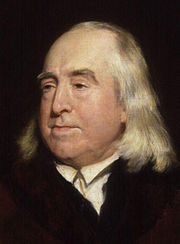
It was Jeremy Bentham, best known for his advocacy of utilitarianism, and his influence upon modern welfare economics, who we can thank for redefining usury.  In a series of letters written to Adam Smith, he tried to convince Smith to give up his support for interest rate limits. Originally, the concept of usury was much more comprehensive than the mere charge of interest. According to Stephen Zarlenga, usury was the "antisocial misuse of the money mechanism for private gain".  Our entire monetary system is a usurious kleptocracy. 

Part of the "monetary" agenda consists of substituting the idea of credit for the concept of money, so that we, the people will come to think of money and credit as interchangeable, when that not true at all. Credit is only a promise to pay in the future; whereas money pays at the time of exchange. Not to mention, credit evaporates in a crisis; money does not.

What about Ron Paul and his mission to return to the gold standard?

Essentially, he is mis-defining money as a thing...in other words, as wealth. This will not give our society the ability to advance properly, because there will never be enough gold to keep pace with population and commerce growth. As history has shown,  banks will cheat and issue private bank paper that only pretends to be convertable to gold. One can only imagine the problems that would cause in a crisis. 

So back to Aristotle's defintion.  The only problem with  is that his definition is all too brief. Alexander del Mar later expanded on Aristotle with the following defintion of money:

"What is commonly understood as money has always consisted tangibly of the number of pieces of some material marked by public authority named and understood by the laws and customs that its palpable characteristic: mark of authority; essential characteristic: possession of value defined by law, and it's function: the legal power to pay debts and taxes and the mechanical power to fascilitate the exchange of other objects possessing value." -- Alexander Delmar
In other words, setting aside whatever is used to signify it - paper, metal, feathers, etc. - "money  is an abstract social power embodied in law, as an unconditional means of payment." *

Which brings us to Stephen Zarlenga's three elements (The American Monetary and Financial Securities Act) that he maintains must be included in order to create a monetary system that works for the benefit of all:
  1. Put the Federal Reserve system into the US treasury so it is within our sytem of checks and balances.
  2. Get rid of the fractional reserve Stop the banks from creating our money supply...any of it. If they create even 10%, they're smart enough to get all of it. Billions are being stolen under cover of law, for not only doing nothing, but for damaging and destroying society.
  3. Government prints and spends new money into circulation to pay for infrastructure repair, either printed on paper or inserted on an account The key is that it's not debt; it's money.  Moreover, human infrastructure must be included:  health care and  education, as you cannot build the hardware without healthy, intelligent people. .
Source:

* Stephen Zarlenga, author of the ‘National Emergency Employment Defense Act of 2010’ (renamed The American Monetary and Financial Securities Act by Rep Dennis Kucinich, which gets rid of a private credit system, and puts into place, a government money system),  founder and director of the American Monetary Institute, and author of The Lost Science of Money

Read more...

Tuesday, May 19, 2009

What Does One Trillion Dollars Look Like?

$1 Billion dollars


ONE TRILLION dollars. This is that number we've been hearing so much about. What is a trillion dollars? Well, it's a million million. It's a thousand billion. It's a one followed by 12 zeros.

$1 Trillion dollars

Read more...

Tuesday, November 11, 2008

Is the Federal Reserve Note More Constitutional than the Liberty Dollar?

The Liberty Dollar is a private monetary system created by Bernard von NotHaus which is fully backed by silver coins.

One year ago, after filing an affidavit, the FBI and Secret Service raided the Liberty Dollar office in Evansville, Indiana. The agents confiscated all the gold, silver and platinum in the office, including two tons of Ron Paul Dollars. They also took all records, files and computers and froze the bank accounts.

Why? Because, the U.S. Mint believes the Liberty Dollar violates the Constitution and issued warnings to consumers against using them unsuspectingly. While it's true that our government did away with the gold standard in the early 1970s, it's not as if the Liberty Dollar is masquerading as government currency. It's very clear that the Liberty dollar, although a commodities backed currency, is a separate form of private trade that people freely choose to engage. Since when does the government have the right to decide what someone can and cannot trade with another individual?

In fact, the Constitution declares that the states shall not issue anything but gold or silver as legal tender. It also states in Article 1, Section 8, Clause 5:

“The Congress shall have the power to coin Money, regulate the Value thereof, and of foreign Coin, and fix the Standard of Weights and Measures.”
Well, Congress does not have any power over the Federal Reserve. The Federal Reserve is the most powerful entity in the world. The Fed is a privately owned cartel, not a branch of our government and not accountable or answerable to anyone. There are no checks and balances and they have never been audited. So, who is violating the U.S. Constitution?

American citizens are free to create their own currency and trade it with someone else. If I have valuable baseball cards and I want to trade these baseball cards for something else of value, I can do it.

There is no doubt that the "Money Trust" saw the Liberty Dollar as legitimate competition. Fast forward one year, today, and one can see why the Liberty Dollar served to circulate the fear of God into their solidly blue blood stream.

Liberty Dollar Class Action

Read more...

Tuesday, January 16, 2007

Real Reason Bush Wants to Invade Iran

October 2004:
The U.S. media tells us that Iran may be the next target of U.S. aggression. The anticipated excuse is Iran’s alleged nuclear weapons program. William Clark tells us that economic reasons may have more to do with U.S. concerns over Iran than any weapons of mass destruction.

In mid-2003 Iran broke from tradition and began accepting eurodollars as payment for its oil exports from its E.U. and Asian customers. Saddam Hussein attempted a similar bold step back in 2000 and was met with a devastating reaction from the U.S. Iraq now has no choice about using U.S. dollars for oil sales (Censored 2004 #19). However, Iraq's plan to open an international oil exchange market for trading oil in the euro currency is a much larger threat to U.S. dollar supremacy than Iraq’s switch to euros.

While the dollar is still the standard currency for trading international oil sales, in 2006 Iran intends to set up an oil exchange (or bourse) that would facilitate global trading of oil between industrialized and developing countries by pricing sales in the euro, or “petroeuro.” To this end, they are creating a euro-denominated Internet-based oil exchange system for global oil sales. This is a direct challenge to U.S. dollar supremacy in the global oil market. It is widely speculated that the U.S. dollar has been inflated for some time now because of the monopoly position of “petrodollars” in oil trades. With the level of national debt, the value of the dollar has been held artificially high compared to other currencies.

The vast majority of the world’s oil is traded on the New York NYMEX (Mercantile Exchange) and the London IPE (International Petroleum Exchange), and, as mentioned by Clark, both exchanges are owned by U.S. corporations. Both of these oil exchanges transact oil trades in U.S. currency. Iran’s plan to create a new oil exchange would facilitate trading oil on the world market in euros. The euro has become a somewhat stronger and more stable trading medium than the U.S. dollar in recent years. Perhaps this is why Russia, Venezuela, and some members of OPEC have expressed interest in moving towards a petroeuro system for oil transactions. Without a doubt, a successful Iranian oil bourse may create momentum for other industrialized countries to stop exchanging their own currencies for petrodollars in order to buy oil. A shift away from U.S. dollars to euros in the oil market would cause the demand for petrodollars to drop, perhaps causing the value of the dollar to plummet. A precipitous drop in the value of the U.S. dollar would undermine the U.S. position as a world economic leader.

China is a major exporter to the United States, and its trade surplus with the U.S. means that China has become the world’s second largest holder of U.S. currency reserves (Japan is the largest holder with $800 billion, and China holds over $600 billion in T-bills). China would lose enormously if they were still holding vast amounts of U.S. currency when the dollar collapsed and assumed a more realistic value. Maintaining the U.S. as a market for their goods is a pre-eminent goal of Chinese financial policy, but they are increasingly dependent on Iran for their vital oil and gas imports. The Chinese government is careful to maintain the value of the yuan linked with the U.S. dollar (8.28 yuan to 1 dollar). This artificial linking makes them, effectively, one currency. But the Chinese government has indicated interest in de-linking the dollar-yuan arrangement, which could result in an immediate fall in the dollar. More worrisome is the potentiality of China to abandon its ongoing prolific purchase of U.S. Treasuries/debt—should they become displeased with U.S. policies towards Iran.

Unstable situations cannot be expected to remain static. It is reasonable to expect that the Chinese are hedging their bets. It is unreasonable to expect that they plan to be left holding devalued dollars after a sudden decline in their value. It is possible that the artificial situation could continue for some time, but this will be due largely to the fact that the Chinese want it that way. Regardless, China seems to be in the process of unloading some of its U.S. dollar reserves in the world market to purchase oil reserves, and most recently attempted to buy Unocal, a California-based oil company.

The irony is that apparent U.S. plans to invade Iran put pressure on the Chinese to abandon their support of the dollar. Clark warns that “a unilateral U.S. military strike on Iran would further isolate the U.S. government, and it is conceivable that such an overt action could provoke other industrialized nations to abandon the dollar en masse.” Perhaps the U.S. planners think that they can corner the market in oil militarily. But from Clark's point of view, “a U.S. intervention in Iran is likely to prove disastrous for the United States, making matters much worse regarding international terrorism, not to mention potential adverse effects on the U.S. economy.” The more likely outcome of an Iran invasion would be that, just as in Iraq, Iranian oil exports would dry up, regardless of what currency they are denominated in, and China would be compelled to abandon the dollar and buy oil from Russia—likely in euros. The conclusion is that U.S. leaders seem to have no idea what they are doing. Clark points out that, “World oil production is now flat out, and a major interruption would escalate oil prices to a level that would set off a global depression.”

Update by William Clark:
Following the completion of my essay in October 2004, three important stories appeared that dramatically raised the geopolitical stakes for the Bush Administration. First, on October 28, 2004, Iran and China signed a huge oil and gas trade agreement (valued between $70 and $100 billion dollars.)1 It should also be noted that China currently receives 13 percent of its oil imports from Iran. The Chinese government effectively drew a “line in the sand” around Iran when it signed this huge oil and gas deal. Despite desires by U.S. elites to enforce petrodollar hegemony by force, the geopolitical risks of a U.S. attack on Iran’s nuclear facilities would surely create a serious crisis between Washington and Beijing.

An article that addressed some of the strategic risks appeared in the December 2004 edition of the Atlantic Monthly.2 This story by James Fallows outlined the military war games against Iran that were conducted during the summer and autumn of 2004. These war-gaming sessions were led by Colonel Sam Gardiner, a retired Air Force colonel who for more than two decades ran war games at the National War College and other military institutions. Each scenario led to a dangerous escalation in both Iran and Iraq. Indeed, Col. Gardiner summarized the war games with the following conclusion, “After all this effort, I am left with two simple sentences for policymakers: You have no military solution for the issues of Iran. And you have to make diplomacy work.”3

The third and final news item that revealed the Bush Administration’s intent to attack Iran was provided by investigative reporter Seymour Hersh. The January 2005 issue of The New Yorker (“The Coming Wars”) included interviews with high-level U.S. intelligence sources who repeatedly told Hersh that Iran was indeed the next strategic target.4 However, as a permanent member of the UN Security Council, China will likely veto any U.S. resolution calling for military action against Iran. A unilateral military strike on Iran would isolate the U.S. government in the eyes of the world community, and it is conceivable that such an overt action could provoke other industrialized nations to abandon the dollar in droves. I refer to this in my book as the “rogue nation hypothesis.”

While central bankers throughout the world community would be extremely reluctant to “dump the dollar,” the reasons for any such drastic reaction are likely straightforward from their perspective—the global community is dependent on the oil and gas energy supplies found in the Persian Gulf. Numerous oil geologists are warning that global oil production is now running “flat out.” Hence, any such efforts by the international community that resulted in a dollar currency crisis would be undertaken—not to cripple the U.S. dollar and economy as punishment towards the American people per se—but rather to thwart further unilateral warfare and its potentially destructive effects on the critical oil production and shipping infrastructure in the Persian Gulf. Barring a U.S. attack, it appears imminent that Iran’s euro-denominated oil bourse will open in March, 2006.5 Logically, the most appropriate U.S. strategy is compromise with the E.U. and OPEC towards a dual-currency system for international oil trades.

Read more...
Iraq Deaths Estimator
Petitions by Change.org|Start a Petition »

  © Blogger templates The Professional Template by Ourblogtemplates.com 2008

Back to TOP