UK or US: Who is More Civilized?
The following info-graph/poll can be found at the Justice Gap, a magazine about law and justice. And the difference between the two
See which side of the pond of justice you stand.



The following info-graph/poll can be found at the Justice Gap, a magazine about law and justice. And the difference between the two
See which side of the pond of justice you stand.
“I have no doubt in my mind that at the present time the greatest polluting element in the earth’s environment is the proliferation of electromagnetic fields." -- Dr Robert O. Becker, twice nominated for the Nobel Prize in Medicine

Judge John Deed: If this cell phone case were to go against the company, it could prove difficult for you.After this discussion between the Judge and Sir Ian, they were evacuated from the court house because of a bomb scare. Coincidence? Judge John Deed didn't think so. Later in the episode, the following barristers argued about the evidence:
Sir Ian Rochester: Not me personally.
Judge John Deed: I mean, it could open a floodgate of litigation. Like with asbestos and tobacco.
Sir Ian Rochester: We’d regard it as a great favor if you were to let it go back to Monty Everard in the Strand.
Judge John Deed: The claimant is very poorly and she lives locally. It seems unkind to ask her to go all the way up to London. On the other hand, being owed a favor by your lot might be a very good position to put myself in.
Sir Ian Rochester: We would be grateful.
Judge John Deed: Is Monty Everard amenable to pressure?
Sir Ian Rochester: Ah. Does that mean you're not interested in what we might offer you?
Judge John Deed: Just no convinced you could deliver.
Sir Ian Rochester: You'd have my word.
Judge John Deed: Then talk to me about my elevation to the Appellate Bench.
Sir Ian Rochester: The Lord Chancellor regrets not having a mind such as yours in the Appeals Court.
Judge John Deed: And this ridiculously unfair PCC hearing against Mrs. Mill being dropped.
Sir Ian Rochester: The Lord Chancellor's department had very little influence there.They're all reasonable men on the Disciplinary Tribunal.
Judge John Dee: Well, the only question remaining, then, Ian, is can we achieve all this within the next 20 minutes?
Sir Ian Rochester: I hardly think that practicable.
Judge John Dee: Because that’s when I’m hearing the arguments for directions in the mobile phone case.
Sir Ian Rochester: We respect the integrity and independence of the judiciary, Sir John. But there comes a point when its very existence depends upon a workable relationship with the Executive. Never more so then in the case you’re about to hear.
Judge John Deed: See, with the license revenue from the mobile phone companies at stake, well, what it, $22 billion; this workable relationship might easily deteriorate into a master-servant relationship. Couldn't it, Ian?
Barrister George Channing:They have in their possession erased emails sent by my clients and to my clients. These they obtained in contravention of the laws of procedure.Then later in the season: Episode 4: "Economic Imperative"
(After more discussion about procedure)
Barrister Jo Mills: The documents contain a report showing a causal link between the radiation in the form of microwaves produced by cell phones and scrambled patterns of electrical activity in the brain. This leads to the stripping of proteins from cells which can in turn lead to tumors
(After more discussion about procedure)
Barrister Jo Mills: One-Way (fictional cell phone company) was alerted to the problems, the health problems, their product posed. Now, instead of accepting the advice of independent scientists, they chose to erase both the paper and electronic trails We now have a situation where there is a floodgate waiting to burst open with claims, and a company whose sole economic imperative is to keep the gates firmly closed.
Barrister George Channing: My clients are an internationally quoted company with a reputation both in employment and social equity which they guard jealously. There is no question of their attempting to foist a deceit on the public. To do so would be counterproductive to their business and run counter to their ethos. Profit does not equate with social irresponsibility as my learned friend seems to be suggesting
Judge John Deed: The question a jury might reasonably ask is why did the company erase the emails?.
(Barrister George Channing argues about limited cyberspace)
Barrister Jo Mills: It wouldn't be unreasonable until you consider the content of the emails and who they were from. Independent scientists who One-Way employed to test their phones. Correspondence from whom they were happy to retain until they began receiving negative findings. which not longer supported their contention that their phones were safe..
Barrister Jo Mills: (addressing the jury) I’d like you to consider, if you will, what single item has come to represent freedom, opportunity, and above all, convenience. I think you’ll agree it’s the mobile phone. For Diana Hulsey, a busy post-operative cancer counselor, with her own life and that of her young son to organize, her mobile phone was essential. To her, it was both the symbol and the instrument of freedom. But it was to become a dangerous, obsessive shackle. This little instrument (holding up the mobile phone) would not only burn into the brain of this young mother, causing a massive, inoperable tumor, it would do so with the fore-knowledge of the manufacturers.However, unfortunately, TV shows like Judge John Deed, and perhaps even more so, The Wire--which allow its viewers a peak around the Oz-like curtain, partially exposing the machinery or behind-the-scenes systemic corruption--are few and far between.
Barrister Jo Mills: Professor, are you the head of neurology at Oxford University?
Professor: You know I am
Barrister Jo Mills: Have you become the foremost expert on astrocytomas, the type of brain tumor Diana Hulsey has?
Professor: Let us say, I know a lot about such tumors.
Barrister Jo Mills: As such, can you tell us why this sort of tumor is on the increase, Professor?
Professor: In my opinion, it’s due to the frequent and persistent interruption of molecular activity in the brain by microwaves.
Barrister Jo Mills: Do we know what’s brought about this increase?
Professor: The increased use of television, microwave ovens, computers, the single biggest cause is mobile telephones used against the side of the head. The create heating. They interrupt the molecular connections. They heat, in particular, the cortical surface of the brain. Due to the angle which the phone is held at, most microwaves are directed to the parietal lobe
Judge: Is there any way to avoid this?
Professor: Yes. Don’t use mobile phones.
Barrister Jo Mills: How long does this sort of tumor that Ms. Hulsey has taken to develop?
Professor: The time is infinitely variable. These tests haven’t been done in humans, only animals. But brain tumors are the fastest growing cancers. Three to six months from the breakdown of cells to detection would be usual.
Barrister Jo Mills: Did you draw any conclusion to the cause of her tumor?
Professor: In my opinion, the persistent use of her mobile phone was the cause. ..exposed to pulsed 900 megahertz radiation for one hour a day for three months, mice show a significant doubling of B-cell lymphomas.
Barrister George Channing: Why doesn’t everyone who uses a mobile phone develop a tumor?
Professor: For the same reason that all people who smoke don’t develop lung cancer or develop breast cancer from pesticides.
Barrister Jo Mills: With your leave, My Lord, I’d like to call my next witness, Dr. Angus Whitten. Dr. Whitten is a partner in the research unit that did the initial safety tests on the ZP-9 phone. He’s here on a witness summons.
Barrister Jo Mills: Dr. Whitten, how long did your lab do research for One-Way?
Dr. Whitten: We were 15 months into our second two-year contract.
Barrister Jo Mills: Who terminated your services?
Dr. Whitten: the marketing director, Max Solveigh, on 12th of December, 2000.
Barrister Jo Mills: Do you know why your contract was terminated?
Dr. Whitten: The reason given was sloppy work.
Barrister Jo Mills: Had it been sloppy
Dr. Whitten: If they say so
Barrister Jo Mills: Was not one of the so-called mistakes your daring to show your client high levels of heat-shock proteins in the brain cells of mice? Mice that had been exposed to microwave levels as those from the ZP-9 phone?
Dr. Whitten: I don’t recall.
Barrister Jo Mills: Are the heat-shock proteins you discovered in test mice so called because of their response to considerable rise in temperature in the cells?
Dr. Whitten: Yes, of course.
Barrister Jo Mills: Ordinarily, a rise of at least 20 degrees centigrade is needed, but you were recording damage to the protein structure in DNA and RNA cells at much lower temperatures.
(Doctor claims he doesn’t recall so barrister refers him to evidence bundle)
Barrister Jo Mills: You discover that exposing cells to microwaves from the ZP-9 cell phone heated cells of the brain in such a way as to damage protein structure.
Dr. Whitten: That appeared to be a conclusion.
Judge John Deed: Have you since changed your mind?
Dr. Whitten: We were taken off the case before reaching further conclusions.
Barrister Jo Mills: Would you read, please, email 39A to the court?
Dr. Whitten: “Max, unless you drastically modify this one, you could be marketing a time-bomb.”
Barrister Jo Mills: Dr. Goodfellow, were you until June of last year employed by Crighton Industries of Pennyslvania?
Dr. Goodfellow: Indeed I was.
Barrister Jo Mills: Can you tell us what you did?
Dr. Goodfellow: I was helping to develop microwave components for industry.
Barrister Jo Mills: Was that for the mobile phone industry?
Dr. Goodfellow: A huge part of it was. We were involved into trying to make ever smaller circuits for phones
Barrister Jo Mills: Why did you leave Crighton Industries?
Dr. Goodfellow: Essentially, I was unhappy with the way the products were being tested by so-called independent testers. They would fund research units at universities to the testing. The would even loan employees to the EPA in order to get the research passed. That person would then return to the company
Judge John Deed: You’re saying they cheat?
Dr. Goodfellow: It’s not called cheating. It’s the politics of science.
Barrister Jo Mills: Did you see problems in the results you were getting back?
Dr. Goodfellow: I did. The smaller the microprocessors, the more they heated the tissue…You pass microwaves through ever smaller gateways, they heat the brain rather like a magnifying glass concentrates the sun
Barrister Jo Mills: Did Crighton Industries know these concentrated microwaves were damaging tissue in the brain?
Dr. Goodfellow: I told them, again and again.
(after much cross-examination accusing him of being an imposter and a thief)
Dr. Goodfellow: That’s the dirty tricks they used because I threatened to expose them…You take these cheap shots. Well, let’s see you feel in five or ten years’ time for your part in this deceit when there are tens of thousands of people with brain tumors! (cancers do not form overnight. In almost all cases, cancerous tumors take many years to form and metastasize.)
“Wireless RF radiation … effects accumulate over time which is an important consideration given the chronic nature of exposure to ‘smart meters’. The current medical literature raises credible questions about genetic and cellular effects, hormonal effects … blood/brain barrier damage, and increased risks of certain types of cancers from RF and ELF levels similar to those emitted by ‘smart meters’. Children are placed at particular risk.”More and more research is starting to show potential health risks from mobile and cordless phones, WiFi and other electromagnetic fields, yet the institutions like World Health Organization, Cancer Research UK, and the NHS all say that there is no good evidence that the sort of electromagnetic radiation (EMR) given off by phones and Wi-Fi routers is in any way dangerous..
With roughly 2.311 billion square feet of rent-able space for things, junk, stuff, possessions, etc., in the United States--a $38 billion industry!--America is a demonstrably materialistic society and becoming more materialistic every single day. It's to the point where things, junk, stuff, possessions matter more than human beings....far more than people, it seems, considering the increasing number of homeless people across America, the wealthiest nation on earth!
“...the United States boasts more than 50,000 facilities and roughly 2.311 billion square feet of rentable space. In other words, the volume of self-storage units in the country could fill the Hoover Dam with old clothing, skis, and keepsakes more than 26 times.”This "need" for storage doesn't stem from frugal "depression babies" who feel the need to save everything just in case, because the square footage of American homes has essentially doubled since the children of the Depression era started buying houses. No, the need for storage has increased right along with the cache in our homes, which implies that, for the most part, things, junk, stuff, possessions have taken on an importance that just isn't there. Not to say that there are not legitimate reasons to rent storage for belongings: moving; changing circumstances; incarceration; future business endeavors, and ironically, homelessness ...but, certainly not $38 billion worth!
“My experience has taught me one thing, the most discriminated group of people, at least in America, are the poor." -- Patrick HoganToday, Orange County is making headlines as it faces bitter backlash over homeless relocation plans as it is now under federal pressure to address what homeless advocates in court filings have called a humanitarian crisis. According to the Los Angeles Times, affluent Orange County "faces special challenges because it has a relatively sparse infrastructure of services and support for homeless people." Of course, Ocean County is not unique. There is a relatively sparse infrastructure of services and support for homeless people all over America.
“A lot of people in America don't realize they might be two checks, three checks, four checks away from being homeless," -- Thomas Butler Jr., who stays in a carefully organized tent near a freeway ramp in downtown Los Angeles.And you can't trust the official homeless rate in America. To be sure, the reported rate is far lower than the actuality. The point-in-time (PIT) homeless counts often occur on a single night in January and are thus subject to significant sampling variability. The accuracy of the count itself depends on the number of volunteers, the weather, the count methodologies, and countless other variables that contribute to its inaccuracy. In other words, the homeless population is hugely under-represented.
“After a count of people on the streets and in shelters, conducted one night in January, and a follow-up survey, the city report found just nine families, or a total of 26 individuals in families who are homeless. Moreover, 87 percent of them live in some sort of shelter.According to a new study. the number of people living on the streets in San Diego County may be 50 percent higher than thought.
But between January and May, Compass recorded 319 homeless families — more than 35 times the number cited in the city’s report. And even that, Keller suggested, might be low.
I've read about, posted about, watched about, listened about big brother, big data, big tech, big "you-name-it", knowing full well that every keystroke I've every keyed; every website I've ever visited; every search I've ever searched; every Youtube I've ever watched; every post I've ever posted; every "like" I've ever liked; every download I've ever downloaded, etc., were and still are most certainly being stored, recorded, and/or deposited somewhere out there in the great big beyond, but it wasn't until I came across this post in Threadreaderapp.com-- and apparently this understates the problem considerably because what you get when you request your data, even if it's comparatively nothing because you'd already disabled all that, is still only a fraction of the total data they have for you -- that it really hit me, and kind of, sort of blew my mind., yet, like I said, of course, this didn't surprise me at all if that makes any sense. There's a kind of disconnect between what I know and what I know if that makes any sense. I mean, I know things in my head in an abstract intellectual sense that I don't really know in my heart if that makes any sense.
No, it doesn't make any sense?
Well, for example, I might know lots about evil, unlawful, treacherous, or surreptitious plans formulated in secret by two or more persons, yet when I see real life evidence of these, dare I say, conspiracies, I'm startled, as in my heart beats faster, my eyes get larger, my blood pressure rises, while at the same time, I'm telling myself, "no surprise here," and to the very few people I have tried to convince of these, dare I say, conspiracies, whether they're there or not, I say, "I told you so."
I know this sounds like the ramblings of a lunatic, and maybe it is, but I need an outlet. I need to pretend someone's paying attention to me, pretend that's someone is taking me seriously, pretend that someone's reading this and just hope it's not anyone I know, or that if they do know me that they don't find out it's me blogging all of this stuff. Because, yes, I'm a coward.
However, now it's very clear to me that whether or not anyone's reading this stuff now, there is no doubt that everything I've ever posted about, read about, watched about, listened about, etc, is all out there for anyone to pull up in a heartbeat, connect it to me and...and that's kind of scary because those certain someones--multi-millionaire/billionaire class of data owners--certainly won't like what I've posted about, read about, listened about, watched about, etc...in other words, they won't like what I thought about.
But I'm just a nobody. Why in the world would they care what I think? That's what I've told myself all along so I kept on posting, reading, watching, listening, downloading....
More than ever before, I hope I'm being paranoid because surely, I'm a needle in a haystack or more aptly, a needle in a mountain of needles. Surely, I'm a winning half-a billion-dollar lottery ticket, a grain of sand on a beach, a book at the Library of Congress, a leaf in a forest, a blade of grass in a meadow...well, you get the picture.
See how that works? My need to outlet far exceeds my need to shut the hell up.
“So we are in a really bad state of affairs right now, in my opinion. It is eroding the core foundation of how people behave by and between each other. And I don’t have a good solution. My solution is I just don’t use these tools anymore. I haven’t for years. -Chamath Palihapitiya, former Vice President of user growth @Facebook.
“ProPublica’s Dollars for Docs database contains payments to doctors and teaching hospitals from pharmaceutical and medical device companies made between August 2013 and December 2015. The disclosures were required under the Physician Payments Sunshine Act, a part of the 2010 Affordable Care Act.
The database includes “general payments” — 15 categories including promotional speaking, consulting, meals, travel and royalties. It does not include research payments nor does it include physicians’ ownership stakes in companies. Research payments will be included in Dollars for Docs in the future. Detailed descriptions of the payments can be found here.
The doctors included in our tool include medical doctors (MD), dentists, osteopaths (DO), optometrists, podiatrists and chiropractors. The tool does not include nurse practitioners and physician assistants (because companies are not required to report payments to them.) The tool also allows you to search teaching hospitals.
We’ve taken the payment reports, which were released by the Centers for Medicare and Medicaid Services, and compiled them into a single, comprehensive database that allows patients to search for their physician and receive a listing of all payments matching that name. We provide rankings for each doctor to allow comparisons to peers in the same specialty and state.
Our analysis found that most doctors take payments, and that doctors who receive payments are, on average, more likely to prescribe a higher percentage of brand-name drugs. For each physician in Dollars for Docs, we document the number of payments he or she received, the total of those payments, and the number of different companies that paid him or her.
The bulk of each physician’s page is taken up by information on each payment he or she received, the company making the payment, the date of the payment, the names of the drugs and medical devices associated with the payment, and whether the payment was made to a third party entity. Sometimes, payments are not made directly to doctors but instead are provided to their universities, medical practices or research centers. We also note whether a doctor has disputed the payment.
By default, a physician’s page shows aggregate amounts received by year and details of payments in the most recent year reported. Users can display other years by using the dropdown at the top of each doctor page. Company and product pages display aggregate totals across all payment years (2013 to 2015).
Sometimes, more than one company makes payments related to a single drug or device. On each product page, we note the number of companies making payments, as well as the names of those companies. Each payment can also be attributed to more than one product, so we note the percentage of payments that relate only to that product (meaning no other products were mentioned in the payment).
Use the Data
Get the data that powers this investigation. A digital download is available for purchase in the Data Store.
ProPublica has published Dollars for Docs since 2010, at first using payment reports that certain companies were required to publish as part of legal settlements with the federal government. Often, these settlements were related to whistleblower lawsuits alleging improper marketing or kickbacks by the company. The now-archived version of our database includes $4 billion in payments from 17 companies, from 2009 to 2013. An archive of those payments is still available at projects.propublica.org/d4d-archive.
We have made some effort to normalize the data and eliminate duplicates, but data is primarily as it has been reported by the companies to the Centers for Medicare and Medicaid Services.
“Open Payments is a national transparency program that collects and publishes information about financial relationships between the health care industry (i.e. drug and device companies) and providers (i.e. physicians and teaching hospitals). These relationships may involve payments to providers for things such as research, meals, travel, gifts, or speaking fees. One of the ways that the Centers for Medicare & Medicaid Services (CMS) provides data to the public is through this search tool, which allows the public to search for physicians and teaching hospitals receiving payments, as well as companies that have made payments.
The purpose of the program is to provide the public with a more transparent healthcare system. All information available on the Open Payments database is open to personal interpretation and if there are questions about the data, healthcare consumers should speak directly to the healthcare provider for a better understanding. More information about the program can be found on the CMS Open Payments website.
There you can get an overview of the data that is collected and displayed and learn more about what is included in the data. For other Open Payments related questions, contact the Open Payments team at openpayments@cms.hhs.gov.
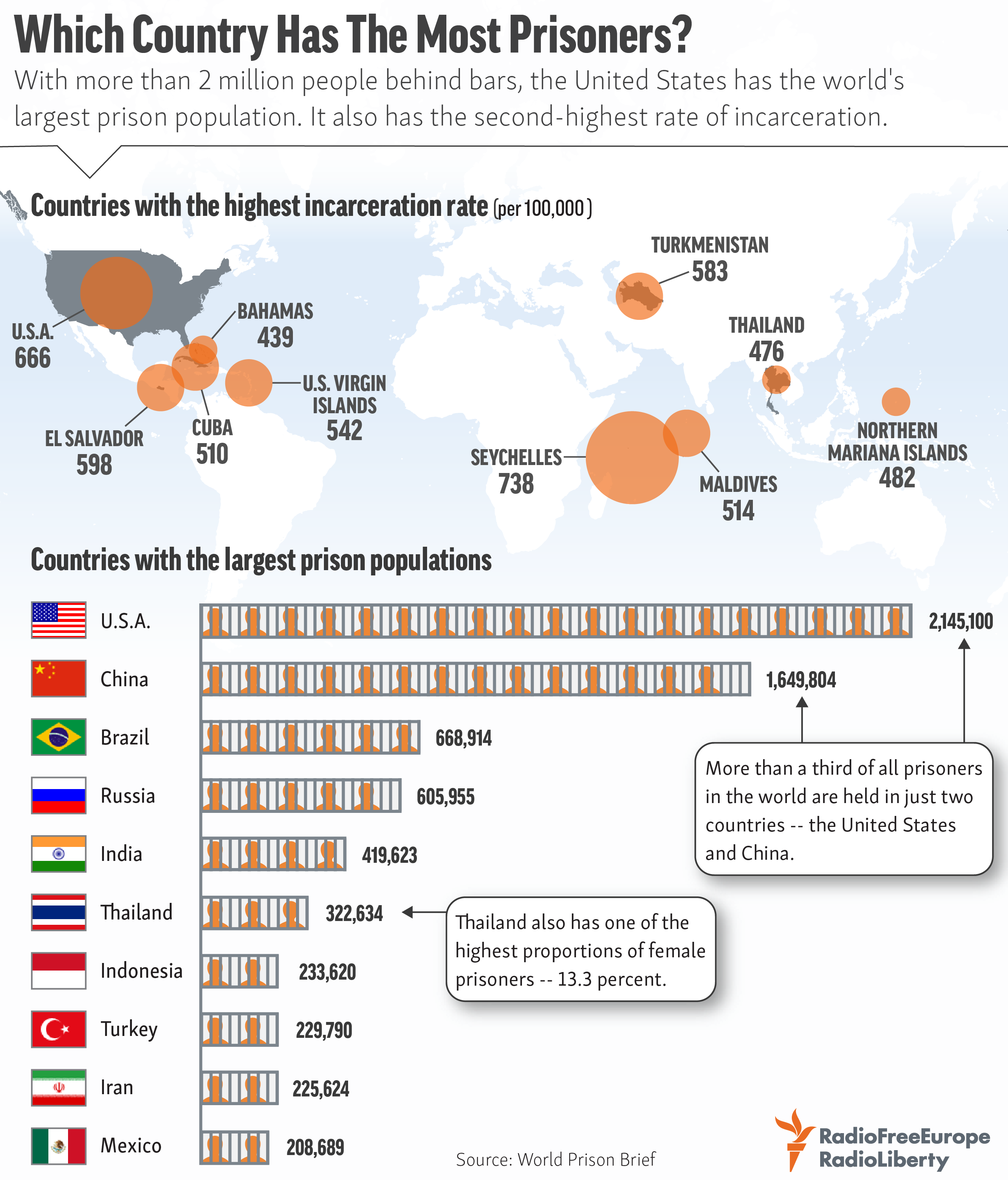
With more than two million people behind bars, the United States has the world's largest prison population, a 500% increase over the last 40 years. Changes in law and policy, not changes in crime rates, explain most of this increase. In fact, crime rates have decreased. The U.S. also has the second-highest rate of incarceration and that doesn't include the more than six million, or almost 3% of the voting population, who are disenfranchised due to past convictions, “felony disenfranchisement.” Nor does it include over 23 million widely stigmatized people, the "vast underground army of released felons — adult men and women convicted of serious criminal offenses for which they have been punished with prison time or probation, and who now form part of the general population.
“You can’t make it without an education!" "Go to college!" "Graduate from high school, go to college, get a good job." How many of us heard these mantras while growing up? How many of us have said these mantras to our children? Other people's children? Despite the fact that getting a college degree today paves the road to debt slavery where the chains and fetters are invisible and the wealthy, powerful owners, anonymous.
“Slavery is likely to be abolished by the war power and chattel slavery destroyed. This, I and my European friends are glad of, for slavery is but the owning of labor and carries with it the care of the laborers, while the European plan, led by England, is that capital shall control labor by controlling wages." -- Chas. Hazzard, The Hazzard Circular, 1862As we start 2018, student loan debt is close to $1.5 trillion, where an estimated 44.2 million Americans have one or more student loans on file. Student loan debt surpasses total U.S. credit card debt by approximately $659 billion. It is the second largest financial asset on the federal government's balance sheet, making up 51.8% of total assets. Only mortgage debt is higher. Not to mention, according to the Federal Reserve is the only form of consumer debt that continued to grow in the wake of the Great Recession.
“The companies making those calls are just one part of an ecosystem feeding on federal student loans. There are also debt servicers, refinance lenders, firms that help former students stay out of default and for-profit schools that make money as borrowers try to repay more than $1.2 trillion in government-backed education debt.They don't understand that the cost of living is rising faster than income that make it increasingly difficult for people to keep up with the everyday expenses of life. They don't understand that a four-year degree is no longer the golden ticket to full time job with benefits and job security. They don't understand that the "four-year" degree actually takes five, six or even more years, which, of course, costs even more money.
“It’s not unusual for me to talk to a couple that between them has $200,000 in student loan debt now. It’s not unusual at all. I talk to them almost every day on this show. And they’re 32 years old, they’ve been out of school for four, five or six years and they’re just treading water. They’re stuck because no one in their life—no supposed high school counselor, no parent, no financial-aid officer—smack you silly. Financial aid is $200,000 in student loan debt. Give me a break. Nobody looked at you and said, “You know, when you bring that baby home from the hospital, there’s a possibility you may want to use your education to raise your children.” -- Dave Ramsey


“Professors who have already been indoctrinated to think a particular way ensure discussions are kept "on topic," or within the traditional bounds of acceptable debate that do not challenge power. I personally have lost track of the number of times I have heard a professor say, "That is interesting, but it is just outside of the scope of the discussion we are trying to have." This is a highly efficient and subtle way of controlling thought.
I don't claim to know the truth about the Las Vegas incident, but I do know that like most lone gunman mass shooting events that turn into giant 24/7 media circuses, the official story just doesn't make sense even before you scratch the surface.
I mean, the guy carried 23 guns to his room and none of the security cameras caught it? Where is the camera footage of him prior to the shooting, carrying all of his weapons? Casinos literally hire former Marines with sharpshooter training in addition to the incredible surveillance of every public area, not to mention 22,000 people with smart phones. We should be awash with CCTV and cell phone footage of the chaos an event like this would create. 22,000 people with smart phones and so little , didn't smart-phone video this. Dig even deeper and the story gets even more ludicrous, preposterous, and should be downright offensive to anyone who spends five minutes on the official narrative.
High Incident Project?
Cui Bono? It certainly wasn't the alleged patsy shooter. Who benefits? An insidious industry that reaps maximum profit and influence for all the institutions that live off fear: the police, the justice system, the media, the weapons and security trade and most importantly, government, who create the "Big Brother" laws that increases their power over the masses. In other words, government and private contractors who have a stake in an exponentially growing national security state from which they stand to make a fortune and further limit our freedom of movement.
Collateral damage to push hidden agendas? Seems that way.
Most of us sign up to become organ donors, literally, out of the goodness of our hearts, but I've always been a little skeptical (fear of my death being hastened by an eagerness to procure my organs) even before I knew the truth: that our vital organs, in order to be viable for transplant, must be harvested from human beings with a pulse, in other words, alive.
You say, how can that be? What part of after-I'm-dead don't they understand? Well, you must ask yourself: "What is the legal definition of death?" "What was the legal definition of death?" "Why did the legal definition of death change?" "If a determination of death must be made in accordance with "accepted medical standards", how are "accepted medical standards" created and what are they based on?" "What happened to the great principle, both medical and moral, that governs the medical profession: Primum, non nocere (First, do no harm)?"
In a nutshell, in order for organ transplantation to occur, the need for "dead patients with live organs" became paramount.Below, is an attempt to answer some of those questions, while exposing the truth about organ donation; however, I implore you to do your own research.
The common law standard of death used to be total cessation of cardiac and respiratory function; that is, observable signs that life has ended. Unfortunately, that clear definition of death renders organ transplantation, impossible. Yet, human organ transplantation is a multi-billion dollar industry. What gives? What gives is the legal definition of death. The medical industrial complex, specifically the 1968 Ad Hoc Harvard Committee on Irreversible Coma, created in response to the development of organ transplantation redefined the end of life in such a way that made the transplantation of organs possible. So, the legal definition of death became subjective, a matter of opinion.
From the book, Death Investigation in America: Coroners, Medical Examiners, and the Pursuit of Medical Certainty By Jeffrey M Jentzen
“The proponents of organ donation--transplant surgeons and bioethicists--represented two powerful new specialties. A decades long conflict began between these specialists and medical examiners, coroners, and prosecutors over the major basis of the latter's professional status--the possession of the body. Now, a lucrative business of organ procurement and a sentimental public relations campaign pressing for organ transplantation began to criticize medical examiners. Created in part in response to the development of organ transplantation, the 1968 Ad Hoc Harvard Committee on Irreversible Coma established that an individual could be legally pronounced dead by the physician based on the constellation of clinical findings that did not include the heart ceasing to beat. Against aggressive organ procurement agencies, for profit, tissue recovery teams, and transplant surgeons entered the fight for desperate patients in a battle over possession of the body. Coe and his colleagues faced new challenges in having to wrestle with the sometimes conflicting goals of their obligation to investigate death and their responsibility to supply the public's increasing demand for organs and tissues to support life.Now that the legal determination of death, since the advent of "cadaver" organ transplantation, has eliminated the total cessation of cardiac and respiratory function, death is now defined as the cessation of brain function--brain death--but, what is brain death? How can you be completely dead if your heart is still pumping, if your lungs are still working? Keep in mind, ventilators do not breathe for the patient, they only force air into the lungs; the patient must breathe out on his or her own. And the diagnosis of Persistent Vegetative State (PVS) is incorrect almost half the time. In other words, there is no true standard, and the diagnosis of brain death is completely subjective, a matter of opinion based on hospital policy that is often influenced by profit margin.
The definition of what constituted death changed from the absence of observable sign of breathing, movement and heartbeat to more subtle definitions based on lack of blood flow to the brain."
“donor cards are legally binding in 48 states and health professionals who act on them are immune from liability in every state."
“The revised UAGA (2006) reaffirms that if a donor has a document of gift, there is no reason to seek consent from the donor family as they have no right to give it legally. If an individual has not made a document of gift during life, the Revised UAGA (2006) presumes the intent to donate organs, therefore has expanded the list of person (in section 9a who can consent on behalf of the individual...Finally, if an individual prefers not to donate, this must be documented in a signed, explicit refusal."
The 1998 DHHS Referral and Request Regulation.
“In light of the current problems regarding the lack of supply of suitable cadaveric organs, on December 15, 1997, Vice President Al Gore along with the DHHS launched a national initiatives to increase organ donation by 20%.
One element of the national initiative was to propose a rule ensuring that next-of-kin are asked to consent to the procurement of their loved ones organs. As a result, the DHHS passed a Referral and Request Regulation in August of 1998.
The new regulation provides that hospitals wishing to receive Medicare payments must refer their patients who died along with their patient whose deaths are imminent to a local Organ Procurement Organization (OPO). Consequently, the OPO would provide personnel trained and experienced in obtaining consent to consult with the patient's next of kin and request consent to procure their loved ones organs.
“Is our understanding of the facts driving our conclusion or is our desire for certain conclusions driving our interpretation of the facts? Are we gerrymandering the lines between life and death solely to meet social goals? In the long run, is this more likely to bolster or erode the confidence and trust of the people in the organ donation enterprise? "
“There's a big difference between mostly dead and all dead. Now, mostly dead … is slightly alive."

© Blogger templates The Professional Template by Ourblogtemplates.com 2008
Back to TOP

